


For Hong Kong schools · English writing
AI that helps students think—not an AI that writes for them.
Penpal gives every student a writing coach that asks better questions instead of handing over answers, and gives every teacher an assistant that flags what matters instead of marking in their place.



How we think about AI
Three rules we don’t bend.
Rule one
Students stay the author
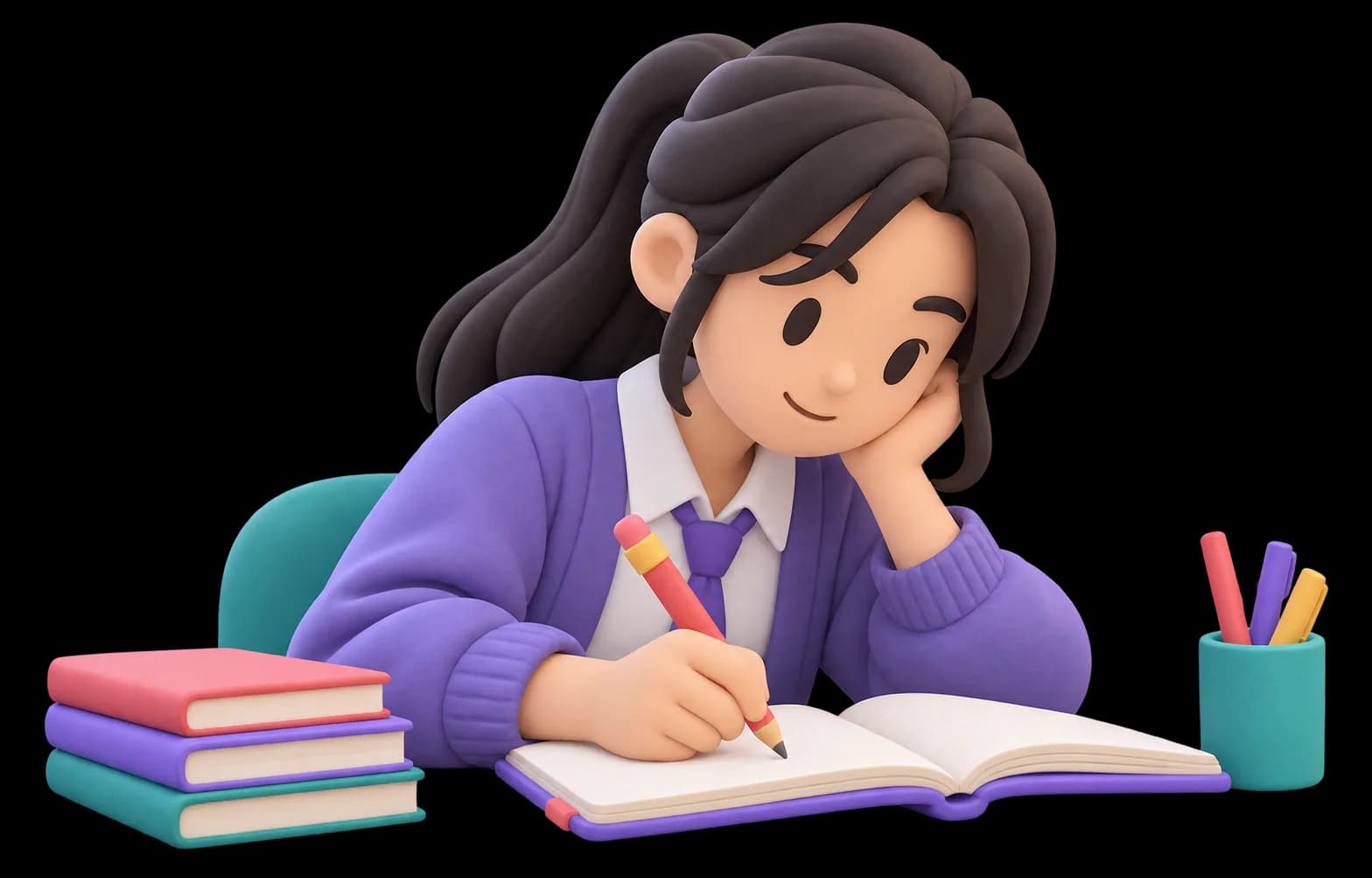
Help starts as a question, never as a sentence. A student who stalls gets an open prompt first, and the hint only narrows if they ask again — it never narrows into prose they can copy. Every request is kept, so the help history becomes evidence of its own: which level, on which skill, and whether the asking is getting rarer.
- Levels 0–4An open question first. The ladder only climbs when the student asks.
- Help that fadesScaffolding is built to be needed less, not used more.
- Asking is dataWhich level, on which skill, how often — kept alongside the draft.
- Level 0An open question. No content in it.
- Level 1A direction to look in.
- Level 2A structure to try, in the student’s own words.
- Level 3A worked parallel — about a different topic.
- Level 4As far as help goes. Still not a sentence to copy.
Every step is asked for. Nothing arrives unrequested.
Rule two
Teachers stay the assessor
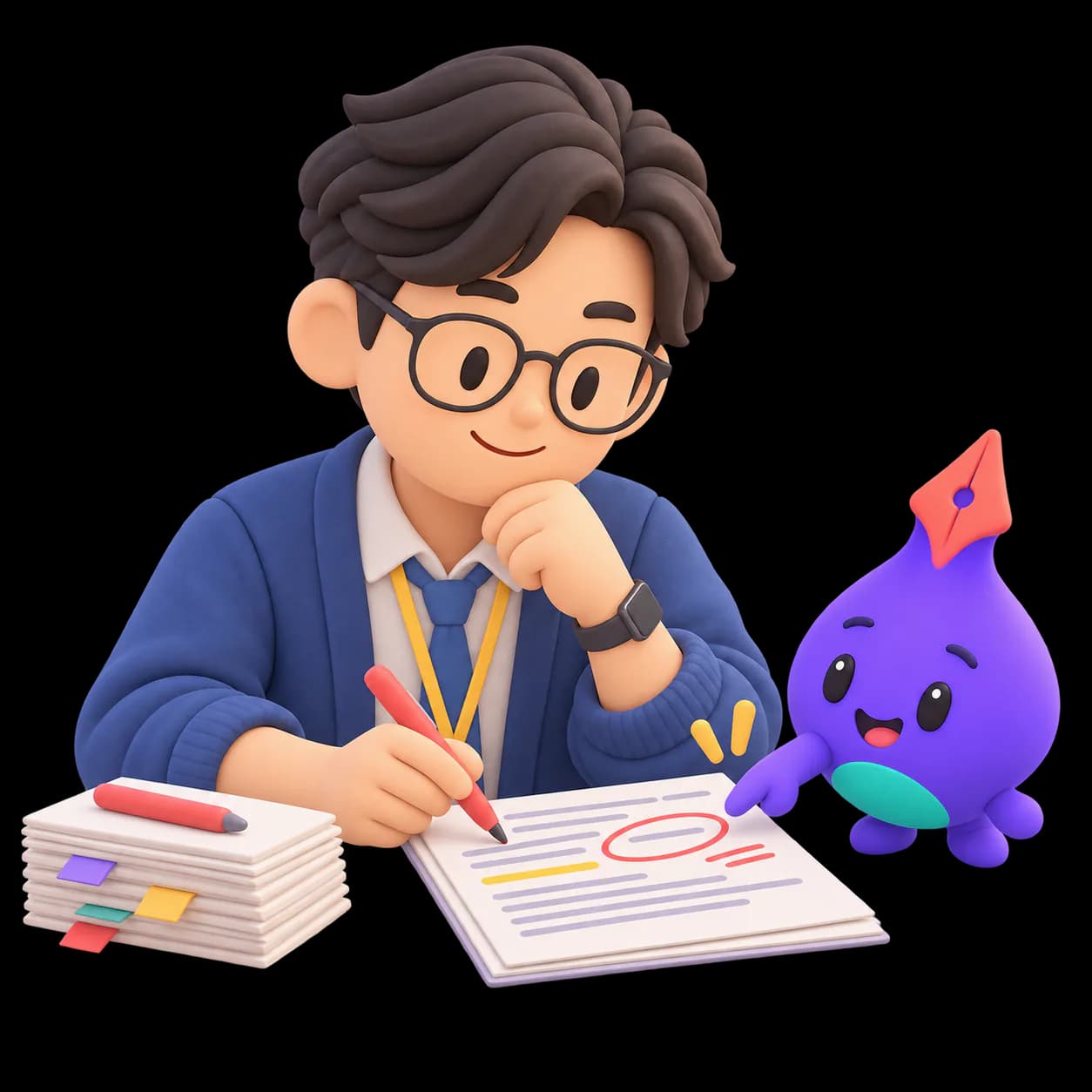
AI reads a submitted version and queues what might be worth a look. Nothing in that queue reaches the student. A teacher opens it, keeps what is useful, rewrites what is nearly right, deletes the rest — and only then does feedback exist. Approved comments are stored as the teacher’s, because they are.
- Proposals, not feedbackA finding stays a draft until a teacher approves it.
- No path that skips a personThere is no auto-send, and no setting that adds one.
- Marking stays humanAI does not score a composition. Not at any level.
- FlaggedParagraph three changes topic halfway through.
- FlaggedPast and present tense mixed in one paragraph.
- ApprovedStrong opening — tell them why it works.
Nothing here has been sent, and nothing can be until a teacher says so.
Rule three
Revision is evidence
A composition is not one file that gets overwritten. Each submission is frozen as a version, and the drafts in between are kept. What changed between version one and version two — a tense fixed, a paragraph reordered, a reason finally given — is the part that shows learning. Across a term those changes accumulate into skill evidence a panel can read.
- Versions are frozenFeedback points at the exact text it was written about.
- Drafts are keptNot only the composition that got the mark.
- The diff is the recordEvidence builds across assignments and across terms.

- Version 1Submitted · frozen
- RevisionTense fixed · a reason added · paragraph three moved
- Version 2Submitted · frozen
Nothing is overwritten. The distance between versions is the evidence.
The loop
One assignment, start to finish.

Student writes
Thinking help sits alongside, not in front

Student submits
A real version is saved, frozen in time

AI pre-review
Possible issues flagged, never sent yet

Teacher decides
Reviews, comments, and gives the real mark

Student revises
Feedback becomes a next draft, not just a comment

Growth remembered
What changed becomes evidence for next time

Give your students a coach, not a shortcut.
Book a walkthrough with your English department.
 Book a demo
Talk to us
Book a walkthrough for your department.
Tell us which school you are from and we will arrange a time. Not a sales call — a working session with your English panel.